Projects
Students in the Planning Complex Cities studio are free to choose a graduation topic and location of own interest. To gain a deeper understanding of relevant concepts, spatial development and institutional conditions in areas, we, however, encourage students to focus on topics and areas that are under investigation in ongoing research projects at the Department of Urbanism. Aligning graduation research with these projects has several benefits. In particular, it:
- brings students in contact with individuals and organisations who are knowledgeable about topics and areas;
- provides access to relevant data and information, including that on specific case study areas;
- provides conceptual and methodological frameworks which can be applied in graduation projects (providing a sound base for the theses but also saving a lot of time which would otherwise be spent on developing those on one’s own);
- embeds graduation research in team work;
- and allows students to experience the professional practice of research.
The projects that the students can connect their graduation projects to are:
- Horizon Europe – Democratising jUst Sustainability Transitions (DUST);
- Driving Urban Transitions – Integrated Peri-Urban Transitions (InPUT);
- Driving Urban Transitions – Co-creating Spatial Strategies for Just and Sustainable Mobility in Large-Scale Housing Estates (15minESTATES);
- Master Thesis Workshop The Hague Southwest;
- Urban Nature: Neighbourhood as a Biotope;
- Horizon Europe – Urban Planning and Design Ready for 2030 (UP2030);
- Vid Sertsya Budova.
These research projects – providing excellent opportunities for alignment during the upcoming graduation year – are described below. You will notice that may of them share a similar thematic focus. The ‘red line’ going through these projects connects issues of spatial justice, citizen participation, inclusive urbanism, and often that in relation to sustainability transitions. Each of the projects, though, has a distinctive take on the matter, its own methodological ‘flavour’, and different case study areas. If you are interested in connecting your graduation project to one of these large research projects but are in doubt which one would suit you or have questions, please don’t hesitate to ask Marcin Dąbrowski for guidance.
Democratising jUst Sustainability Transitions (DUST)
The DUST project will develop and operationalise novel participatory instruments for proactive and strategic citizen engagement in sustainability transitions. It will combine design-led territorial tools with digital tools for citizen deliberation at scale. The project addresses a defining societal and democratic challenge for Europe, which is to hear the voices of least engaged communities, especially in structurally weak regions dependent on energy-intensive industries, which will be most affected by transitions towards a more sustainable future. Building on the concept of ‘active subsidiarity’, the project will employ an innovative mix of research methods, and experimental citizen participation, to understand the determinants of participation in decision-making on sustainability transitions at different levels of government, and to develop effective policy recommendations for inclusive engagement of civil society.
DUST is funded under a Horizon Europe Research and Innovation Action program, and led by the section Spatial Planning & Strategy at the Department of Urbanism, TU Delft. We encourage graduation students to consider exploring open research questions in dimensions of the project. Our suggestions are listed here:
Factors influencing civic participation of least engaged communities in just sustainability transition initiatives: The objective of research in the DUST project’s analytical dimension is to assess how community, policy, and context factors enhance or impede participation of vulnerable, least-engaged, and historically marginalised communities in place-based (often multi-level) sustainability transition policies. Questions we raise include: How do place-based initiatives vary in the provision of different structures, processes, and arenas for strengthening community mobilisation? What are barriers to mobilisation and how can these be overcome?
Instruments for the deliberative governance of just sustainability transition policies: In its instrumental dimension, the DUST research will examine the instruments, mechanisms, and processes that enhance the participation of least-engaged communities in the deliberative governance of place-based approaches to just sustainability transitions. Questions we raise include: What are relevant instruments in this context and how can these be classified by processes, arenas and available means? What are the performances of regional design-led territorial instruments in this context and how can these be enhanced? What are complementarities between digital and analogue forms of participation? How do digital tools and instruments influence the extent and quality of participation?
Affective communication and narrative construction in just sustainability transition policies: Research in the communicative dimension of the DUST project explores communicative strategies that enable two-way exchanges between policy-makers and communities and that are underpinned by the concepts of ‘affective communication’ and ‘narrative construction’. Questions we raise include: What are existing stories that affectively influence the perceptions of sustainability transitions? What are the tools (both digital and non-digital ones) and languages that facilitate narrative re-construction?
Students choosing to integrate their thesis projects with the DUST project are free to apply the project’s conceptual lens and/or methods and tools to a location of their choice, or to opt for focusing on of the eight case study regions covered in DUST.
For more information on the DUST project, please click here or contact: V.E.Balz@tudelft.nl or L.Qu@tudelft.nl
Integrated Peri-Urban Transitions (InPUT)

Engaging Places and Communities for Integrated Peri-Urban Transitions is a three-year project (2024-2026) led by TU Delft as part of the Driving Urban Transitions (DUT) partnership, a research and innovation programme co-funded by 28 European countries and the European Commission under Horizon Europe. InPUT tackles the theme of the 15-minute city, one of the three ‘Transition Pathways’ of the DUT Partnership, and is concerned with rolling out the principles behind that model across European peri-urban areas. The project argues that ideas springing from the 15-minute city concept become limited if applied only in the successful cities most suited to receive them. Therefore, it is crucial to extend them to peri-urban areas where implementation might be more difficult but interventions towards accessibility, proximity and liveability are more urgent. In other words, the goal is to democratize the 15-minute city.
To achieve that, InPUT consists of three work packages, starting with (1) building a catalogue of spatial-functional features, governance capacities and societal aspirations of European peri-urban areas, which then (2) feeds into the co-design of spatial visions and strategic transformation processes enabling locally appropriate and endorsed 15-minute settings in different places. In parallel, (3) the project develops tools to evaluate the performance of these visions along the key principles of the 15-minute city of wellbeing, sustainability, and inclusion. Alongside TU Delft, the consortium includes the University of Antwerp, TU Wien, University of Porto and University of Minho as academic partners and is supported by various policy and civil society cooperation partners. The regions being studied are:
- Groenemetropool Arnhem-Nijmegen/Foodvalley (NL)
- Kempen Antwerp-Turnhout (BE)
- Braga-Guimaraes-Famalicao (PT)
- Eastern Vienna Romerland-Carnuntum (AT)
Student involvement is most welcome in work packages 1 and 2, preferably focusing on one of the case studies (or more than one). Eventually, students could take advantage of the conceptual and methodological frameworks developed in the project and test them in other European peri-urban areas. Students can benefit from the long list of contacts and partners in each study area as well as from the theoretical and methodological approaches already established for the project. Potential topics of interest may include:
- Spatial visioning and scenario development towards 15mC-inspired spatial settings in peri-urban areas.
- Participatory research and co-design activities with local community groups towards strategic transformation paths in peri-urban areas.
- Research on peri-urban mobility options, challenges and opportunities.
- Strategic spatial planning in face of the projected demographic, economic and spatial transformations in the (Dutch) study area.
- Studies of community aspirations, perceptions and priorities regarding amenities and liveability in peri-urban areas.
The TU Delft team consists of Rodrigo Cardoso, Caroline Newton, Birgit Hausleitner, and Ana Poças, who can mentor the students involved in this project.
For more information, please contact: r.o.v.cardoso@tudelft.nl
Driving Urban Transitions – Co-creating Spatial Strategies for Just and Sustainable Mobility in Large-Scale Housing Estates (15minESTATES)
The 15minESTATES project looks at the nexus of (1) urban space, (2) transport options, and (3) people’s needs and capacities as key dimensions for sustainable mobility transitions. With a specific focus on large-scale housing estates (LHEs), a complex urban setting that houses large numbers of inhabitants all over Europe, the project aims to co-create locally adapted and accepted spatial strategies and interventions for just and sustainable mobility. The specific objectives of the 15minESTATES project are: (1) to adapt and reframe the 15-minute City concept for the specific context of LHEs; (2) to build a comprehensive knowledge base on the existing urban structures, public spaces, their quality, amenities, and transport infrastructure in LHEs; (3) to explore the mobility needs, perceptions, and behavior of different user groups in LHEs; (4) to identify specific challenges and co-create spatial strategies and interventions in public spaces to facilitate the transition toward sustainable mobility in LHEs; (5) to synthesize case-specific results and propose design principles and approaches for transforming public spaces in LHEs to enable results’ transferability to other countries. The project will employ a comparative case study approach, focusing on five LHEs in Bulgaria (Mladost 4), Hungary (Pesterzsébeti), Germany (Halle Neustadt), the Netherlands (Delft-West), and Latvia (Ziepniekkalns).
As our local case study, we selected Delft-West (Voorhof, Buitenhof and Tanthof-West), an area that was also assigned as one of the twenty focus areas in the National Programme Livability and Safety. In this case study we closely work together with the municipality of Delft as a cooperation partner. We also align our activities with the WijWest local programme committee. Timewise, the first half of the project we focus on analysis of the current situation. We are looking at spatial structures, transport options, location of functions and amenities, transport behaviour, and people’s needs, perceptions and satisfaction. We do this using a variety of methods (survey, (walk-along) interviews, participatory mapping, focus groups, …). This information will then provide input for a co-creative process with local stakeholders, supported by modelling, where we try to find concrete solutions and strategies to promote more active mobility and use of local functions and amenities.
There is an interesting possibility for graduation projects to connect to the project, use the project’s concepts and methods, and take advantage of our local network, to carry out a more focused and/or localised version of our project, e.g. through focusing on a specific part of the neighbourhood, a specific target group, and/or a specific set of interventions. Another possibility is to apply the project’s ideas and methods to another large housing estate, in the Netherlands or elsewhere. You will also have the chance to contribute to the project with your work and participate in some of the project’s activities.
For more information, please contact: t.verbeek@tudelft.nl

Master Thesis Workshop The Hague Southwest
The Hague Southwest is a district in the city of The Hague, consisting of four early postwar neighbourhoods: Bouwlust, Vrederust, Morgenstond and Moerwijk. These four neighbourhoods provide accommodation to approximately 70,000 residents, which is comparable to the size of a small Dutch city. Many residents in these areas suffer from poverty, long-term unemployment, physical and mental health issues. For youngsters, there is a lack of opportunities related education, work, and leisure. Almost half of the residents struggle to get by on a daily basis and many residents often feel not safe in their own neighbourhood. The majority of the housing consists of medium-rise apartments in the social rented sector, many of which are nearing the end of their life cycle. The Hague Southwest has a lot of public space, but not all of this is used in optimal ways. Moreover, the region-wide need for significant housing construction has sparked a debate about densification in the area. The city of The Hague, local housing associations and the national government have joined forced in the so-called ‘Regiodeal Den Haag Zuidwest’ and will invest a lot of resources into these neighbourhoods in the coming years.
In this context, the LDE Centre Governance of Migration and Diversity (of which our faculty is one of the lead partners) has initiated a so-called Master Thesis Workshop The Hague Southwest. This graduation lab initiative aims to make a positive contribution (through graduation research and education) to the ambitions for The Hague Southwest. Within the Master Thesis Workshop (MTW), students with different backgrounds from the universities of Delft, Rotterdam and Leiden work on special themes/challenges.
Each student will be supervised by his/her own supervisors at the ‘home’ faculty. However, the MTW will offer an interdisciplinary vehicle for regular exchanges, not only between students, but also between students and civil servants from the city, housing associations and other professional actors. In other words, if you are keen on working together in your graduation project with other disciplines and with societal stakeholders, this may be a good choice for you. Your ‘home base’ will be the Planning Complex Cities Studio, but you will also be periodically active in the LDE Master Thesis Workshop.
The City of The Hague has offered a list of challenges (in Dutch) that they would like to be addressed by graduate students from the constituent faculties and departments represented in the LDE Centre Governance of Migration & Diversity. Below are some ‘typical’ Urbanism / Planning Complex Cities themes, which students can take on from September 2023 onwards:
- The design of inner courtyard gardens in relation to realising ownership by residents or citizens for green space. The housing association Haag Wonen actually have inner courtyard gardens that they can put forward as case studies.
- (Perceived) safety and local economy in relation to public space. The Safety Department of the municipality of The Hague is particularly interested in how to design the plinths of buildings and public spaces in such ways to increase citizens’ perception of safety. Of particular interest is the question to what extent shops in the plinths actually contribute or detract from the perception of safety.
- Placemaking: what can temporary initiatives in public space and beyond mean for The Hague Southwest? What are success factors of this type of temporality? What about examples and experiences elsewhere (whether or not based on empirical research)? How do placemaking and related temporal initiatives contribute to area redevelopment in general, and strengthening social cohesion/community in particular? Under which conditions do placemaking and related temporal initiatives contribute to (perceived) ownership by residents and local entrepreneurs?
For more information, please contact: R.J.Kleinhans@tudelft.nl
Urban Nature: Neighbourhood as a Biotope
As the climate crisis deepens, the importance of biodiversity is increasingly being recognised. Large municipalities such as Rotterdam and The Hague have already implemented monitoring plans and measures to strengthen biodiversity. However, these measures often do not receive a lot of public attention as citizens perceive biodiversity as complex, boring, and distant from their daily lives, often with an equivocal understanding that improving biodiversity is the same as adding common greenery to cities (parks, grass). Because about 60% of the urban environment is privately owned in most Dutch cities, public efforts will only succeed if citizens are actively engaged in biodiversity interventions. While there are various open questions around the topic of urban biodiversity, this project focuses on the intersection of biodiversity action and citizen engagement. We welcome students interested in taking a participatory research-by-design approach and/or action research approach to the question of how to engage citizens in biodiversity action. A socio-ecological approach to design and/or planning is also welcome.
This proposal benefits from and contributes to the larger “Neighbourhood as a Biotope” (NAB) program, a trans- and interdisciplinary program, including various universities (TU Delft, EUR, RUAS), disciplinary field (design, planning, ecology, biology, among others), citizen organisations, industry partners, and the municipalities of The Hague and Rotterdam.
For more information, please contact: Juliana Gonçalves J.E.Goncalves@tudelft.nl (Spatial Planning & Strategy) or Geertje Slingerland G.Slingerland@tudelft.nl (Urban Studies)
Urban Planning and Design Ready for 2030 (UP2030)

Call for Graduation Project Proposals UP2030: Promoting Inclusive Participation and Spatial Justice in Urban Planning
The Complex Cities graduation studio, in collaboration with the UP 2030 Horizon Project, invites you to submit proposals for your graduation projects. We are seeking innovative research and design proposals that focus on developing tools and approaches for promoting inclusive participation and spatial justice in urban planning and design. This call aligns with Task 3.4 of the UP 2030 Horizon Project Urban Planning and Design ready for 2030, emphasising the importance of just procedures and the inclusion of diverse voices throughout the planning process.
Themes and Focus Areas:
Your proposal should address one or more of the following dimensions of inclusive participation and spatial justice:
- Procedural Justice: Develop methods and tools that ensure fair and inclusive participation in urban planning processes. Projects may focus on creating frameworks for inclusive decision-making, participatory visioning, and needs assessment that incorporate a wide range of community voices.
- Inclusive Participation: Innovate ways to engage diverse communities in the planning and design process. This includes developing digital storytelling tools, participatory mapping methods, and engagement toolkits that capture citizen perceptions, preferences, and values.
- Spatial Justice Assessment: Develop benchmarking and assessment methodologies to evaluate and promote spatial justice in urban environments. This could involve creating indicators and metrics inspired by the Brede Welvaart (Inclusive Prosperity) framework used by the Dutch government.
Application and Implementation:
- Participatory Visioning and Needs Assessment: Ensure that participation starts from the initial stages of planning through to the implementation of tools and prototypes. Projects should demonstrate how they will incorporate community input at every stage.
- Digital Storytelling and Mapping: Utilize digital tools to engage communities in storytelling and mapping, capturing their experiences and visions for their neighbourhoods.
- Community Engagement Tools: Adapt existing tools for participatory mapping and community engagement, ensuring they are tailored to local contexts and effectively engage citizens in visioning, strategy-making, and design.
Selection and Support:
Selected projects will receive guidance and mentorship from faculty and researchers at TU Delft and collaborators from the UP 2030 Horizon Project. Additionally, there will be opportunities to present your work at relevant academic and professional forums, contributing to the field of spatial justice and inclusive urban planning.
Join us in advancing the future of inclusive and just urban environments. Submit your proposal today and make a meaningful impact on the way cities are planned and designed.
For more information and inquiries, please contact Roberto Rocco (r.c.rocco@tudelft.nl) and Juliana Gonçalves (j.e.goncalves@tudelft.nl) and see here.
We look forward to your innovative and impactful proposals!
Vid Sertsya Budova
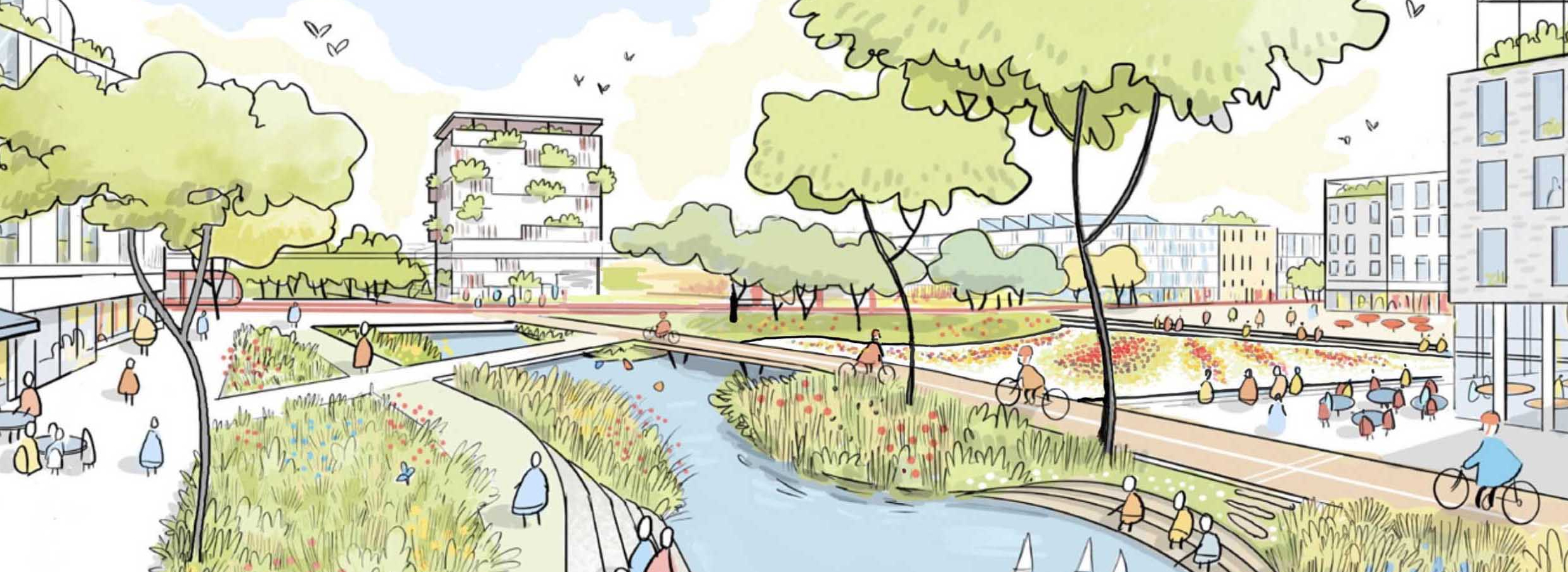
Vid Sertsya Budova project is aimed at Ukrainians who have lost their homes or have been forced to leave their places of permanent residence. The project’s goals are to create new high-quality housing standards, to give people a place to live a fulfilling life and to work on self-development. Principles are:
- Future-oriented sustainable environment
- Relevance beyond time
- A space of fulfillment
- Functional integrity
- Magnet town
- Conscious usage of resources
- Environmentally friendly materials
- Vibrant and productive landscape
- Compact 15-minute town
For more information, please see here and contact: c.e.l.newton-1@tudelft.nl
Networks
In addition to the above projects, students may choose to engage in collaboration with one of the longer-running networks focusing on specific issues or geographical areas. These options are listed below.
Centre for the Just City
Call for Graduation Project Proposals: Exploring Spatial Justice in Urban and Regional Planning with the Centre for the Just City

The TU Delft Centre for the Just City, in collaboration with the Complex Cities graduation studio, invites you to submit proposals for your graduation projects. We are seeking innovative research and design proposals that address the three main dimensions of spatial justice in urban and regional planning. This is a unique opportunity to contribute to the advancement of equitable, inclusive, and just cities through your academic work.
Themes and Focus Areas:
Your proposal should explore one or more of the following dimensions of spatial justice:
- Distributive Justice: Investigate how rthe burdens and the benefits of urban development, including resources, services, and opportunities are allocated across different urban and regional contexts. Projects may focus on access to housing, public services, green spaces, and infrastructure, aiming to identify and propose solutions for existing inequalities. The focus here should be on the governance, geography and politics of the distribution of resources.
- Recognition Justice: Address the recognition and representation of diverse groups and communities in the planning and design of the city. This includes projects that highlight the needs and contributions of marginalised or underrepresented groups, ensuring their voices, identities and trajectories are acknowledged in planning processes and outcomes.
- Procedural Justice: Examine the processes through which decisions are made in urban and regional planning. Proposals should aim to enhance participatory practices, transparency, and inclusivity in decision-making, ensuring that all stakeholders have a fair opportunity to influence planning outcomes.
Assessment and Evaluation of Spatial Justice:
In addition to addressing the dimensions of spatial justice, we encourage proposals that develop methodologies, tools, and frameworks for assessing and evaluating spatial justice in the built environment. This could include:
- Developing metrics and indicators for measuring spatial equity and inclusion.
- Case studies that apply these metrics to real-world urban contexts.
- Comparative analyses of different urban areas to identify best practices and areas for improvement.
- Innovative design interventions that promote spatial justice and demonstrate measurable impacts.
Selection and Support:
Selected projects will receive guidance and mentorship from the faculty and researchers at the TU Delft Centre for the Just City. Additionally, there will be opportunities to present your work at relevant academic and professional forums, furthering your contribution to the field of spatial justice.
Join us in shaping the future of just and equitable urban environments. Submit your proposal today and be a part of the transformative journey towards spatial justice in urban and regional planning.
For more information and inquiries, please contact Roberto Rocco, Caroline Newton or Juliana Gonçalves
Leiden-Delft-Erasmus Research Centre Governance of Migration and Diversity (GMD)
The Leiden-Delft-Erasmus Research Centre Governance of Migration and Diversity (GMD) is a research centre of scholars that share a focus on the governance of migration and diversity. With its multi- and interdisciplinary knowledge infrastructure, the mission of the LDE Centre GMD is to generate knowledge for and have impact on the governance of migration and diversity at various levels of scale. Its main aim is to achieve resilient and inclusive societies.

TU Delft scholars connected to this centre tackle issues of urban development and socio-spatial justice, including social inequality, segregation and neighbourhood development. These issues are strongly related to migration and diversity. Segregation is for instance caused by social-spatial inequalities of people with a migration background or the concentration of low-income households in areas which reveal super-diversity in terms of migration backgrounds. Planning Complex Cities students who are interested in the socio-spatial implications of inequality, segregation, migration and diversity, can benefit from this network through access to scholars with various backgrounds, sources of information, and, in the near future, research projects jointly enacted by senior academics affiliated to the Centre.
For more information, please contact: R.J.Kleinhans@tudelft.nl
China and the Greater Bay Area megaregion
Graduation projects investigating Chinese cities and regions build up upon an expertise on spatial development, governance and spatial planning in China, present at the Spatial Planning & Strategy section. They profit from ongoing collaboration between TU Delft and Chinese partner institutions, particularly South China University of Technology (SCUT) in Guangzhou. Since 2012, SCUT and TU Delft have established a joint research centre on Urban Systems and Environment (USE). The centre facilitates interdisciplinary research on sustainable urbanization in the European Union and China. Comparative studies seek to enrich a common understanding of future challenges concerning sustainable urbanization, as well as innovations planning strategies, governance models and design solutions.
Planning Complex Cities students who participate in this network will benefit from accessibility to knowledge and data particularly related to the Greater Bay Area (GBA) where SCUT is located. Cities in this region -Shenzhen, Guangzhou and Hong Kong for instance – have also been studied by MSc Urbanism students of previous years. Conducted research therefore provides for a broad, general understanding of the context and issues at hand, as well as potentials for future development. The most relevant topics are related to inclusive development in the context of migration, industrial transformation and climate change. However, students are not restricted to this platform when choosing their study cases. The same topics can be studied in other cities and regions in China, using own collaboration networks for data collection and field work. Teachers will support such initiatives with contacts, in for instance Beijing and Shanghai, if possible.
For more information, please contact: L.Qu@tudelft.nl
Global Urban Lab
The Global Urban Lab is a communication and action platform, which is part of the TU Delft | Global Initiative. Its goal is to bring visibility and articulation to TU Delft staff and students doing work on urbanisation in the Global South (low- and middle-income contexts). Next to hosting discussions, lectures and events, the Global Urban Lab predominantly wants to connect and build knowledge: serving as a platform throughout all faculties, schools, and departments for researchers and practitioners to meet, learn and collaborate in a transdisciplinary manner. For more information, please visit this site.
Confronting Informality
Urban informality can be defined in many ways and is highly contested. Scholars have identified three schools of thought characterising debates on informal urbanisation: dualist, legalist and structuralist. Despite various critical accounts, a dualistic framework for the study of informality persists. The assumption of formality as the “norm” and informality as an “anomaly” can still be read in practice and policy. In recent debates, this binary opposition is being addressed by several authors, forcing a more nuanced understanding of what is “informal”.
Members of the Department of Urbanism are deeply engaged in the debate mentioned above, evidenced for instance by the organisation of five “Confronting Informality” Symposiums (https://confrontinginformality.org), including an international competition in 2018. Due to continuing engagement, Planning Complex Cities students can benefit from access to many experts on this topic, and are invited to help with the organisation of the symposium and the competition.
 Planning Complex Cities TU Delft